Overview
Monitoring pollinators continuously.
Traditional pollinator surveys rely on timed observations or pan traps, methods that are labor-intensive and temporally coarse. BeeEye pairs a field-hardened camera unit with a deep learning classification pipeline to deliver continuous, species-level bee identification data without an observer present.
The system is designed to operate unattended for extended periods, powered by a solar panel and writing to a local data logger. This makes it practical for multi-site deployments across experimental plots or landscape gradients, supporting the kinds of replicated, long-term studies that pollinator ecology requires.
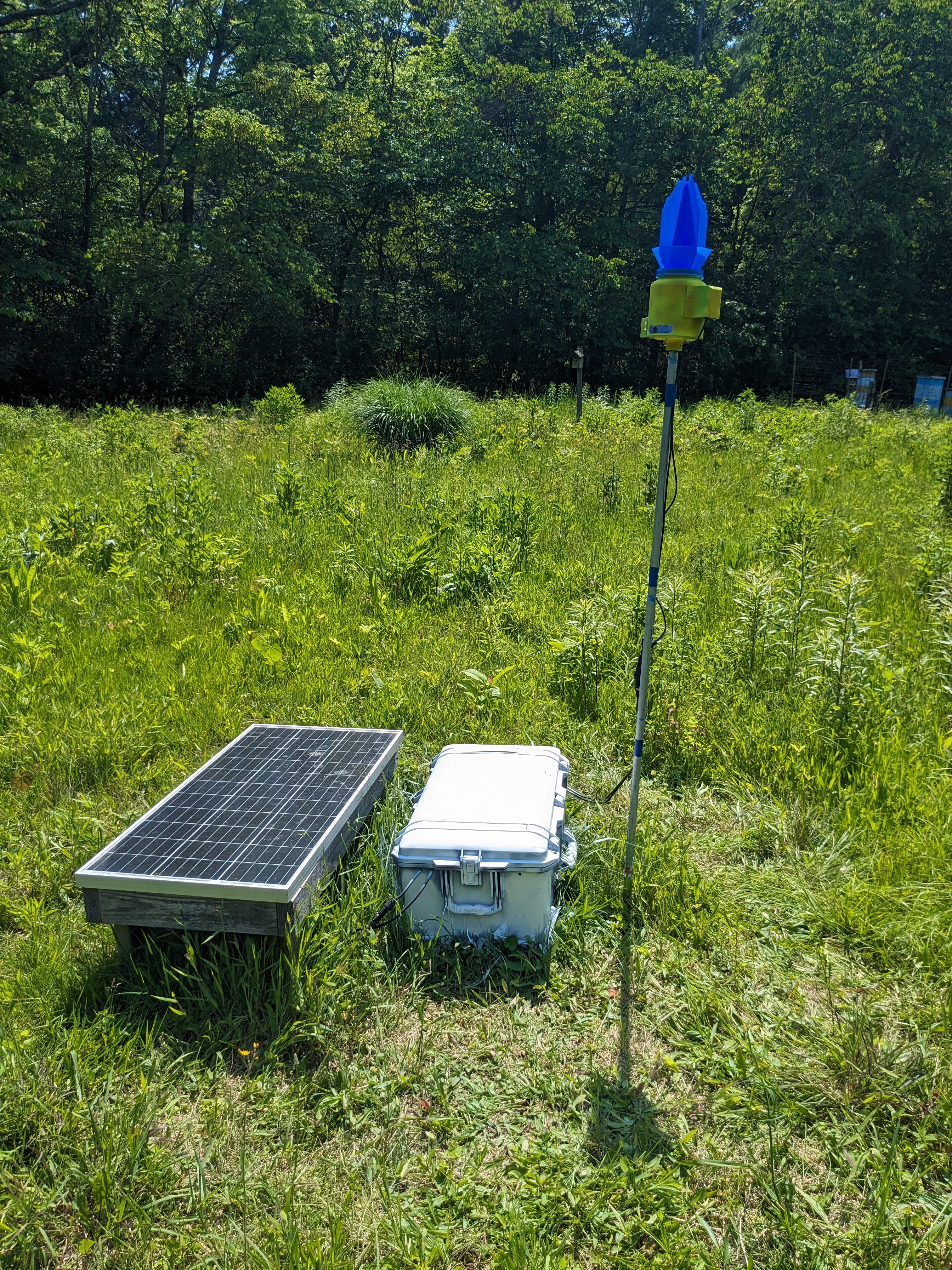
BeeEye deployed in a meadow field site with solar power and weatherproof data logger.
Capabilities
What the system does.
-
Continuous field deploymentSolar-powered unit operates unattended across extended field seasons, capturing pollinator activity throughout the day without observer disturbance.
-
Species-level bee identificationComputer vision pipeline trained to distinguish bee taxa from images, enabling species richness and community composition analysis from automated data.
-
Activity profiles and visitation ratesGenerates time-stamped visit records that support analysis of diel activity patterns, flower visitation rates, and plant-pollinator network structure.
-
Scalable, low-cost hardwareField-ruggedized components designed for concurrent multi-site use, lowering the per-site cost of continuous pollinator monitoring.
Collaborators
Built with.
Grozinger Lab · Penn State
Center for Pollinator Research
INSECT NET
Penn State Dept. of Entomology